A lot has happened and I have learned so much since my last post. I had the opportunity to catch another swarm and do my first cutout. A cut out is removing bees, brood and honey from a wall or in this case a fallen tree by literally cutting them out.
The swarm was found on the sidewalk in Marietta, PA. A friend, posted it on Facebook and asked for help in moving the bees. My husband, Shane and I were able to go after work but unfortunately half of the swarm, including the queen was sprayed by the borough and killed prior to my arrival. This makes me so sad and highlights the need for education. Most bees are gentle and will not attack. They are not a nuisance and our vital to humans, food chain, and existence. Some of the bees had flown off and escaped the spray. When they returned, they landed on a parking meter which is where they were when I arrived. I used a little lemongrass oil and they marched into my swarm trap.
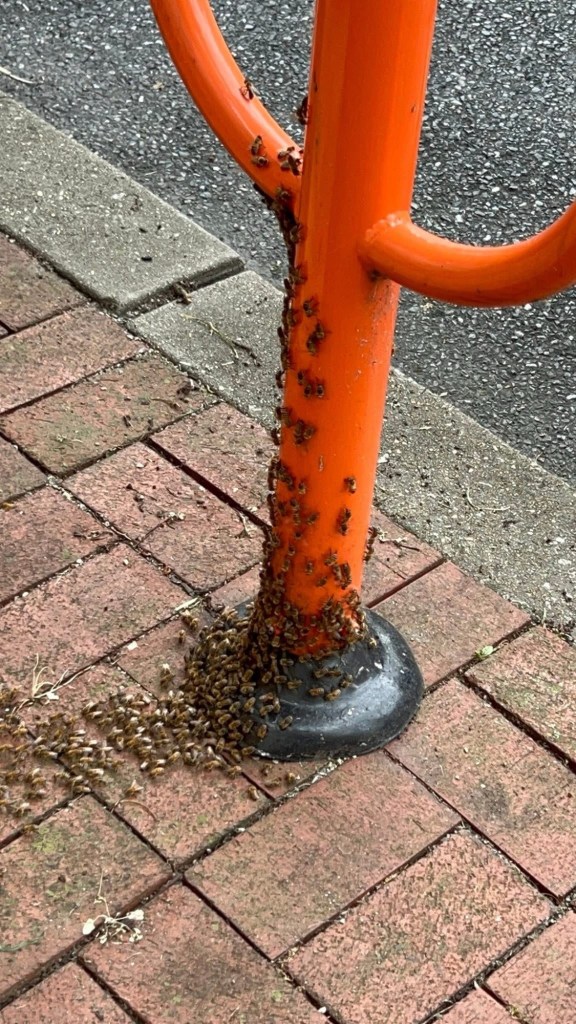
I was confident that they did not have a queen so I set the swarm trap next to another hive. This colony accepted the new bees and it actually worked out well because the colony that the parking meter bees joined was on the smaller side. We have had EPIC amounts of rain lately which prevents bees from foraging and the availability of nectar naturally drops significantly this time of year. I have been feeding these bees in hopes that they will buildup their numbers and food stores before winter. It feels strange to be worried about overwintering in July but now is the time to prepare.
The next day another friend who has a shop across the street from the where the swarm rescue took place (Marietta is the type of town where everyone knows everyone) called me to ask if I was interested in getting a hive out of a tree that had fallen in her sisters yard about three weeks ago. I’ve never done this before but of course I was interested and of course I talked Shane into helping me. It wasn’t a hard sell. I think he secretly loves this as much as I do.
My friend’s sister was out of town and her other sister, who just happens to be married to a beekeeper, was house sitting for the week. I gathered up as much PPE (personal protective equipment) as I could find, a swarm trap, frames, rubber bands and a queen clip. Shane grabbed some chain saws and we headed over.
My friend’s sister (now a friend of mine as well), was happy to help and her husband answered questions over the phone as he was a few hours away. when we approached the fallen tree there was definite activity and an obvious entrance. After everyone put on suits, jackets or at least a hood, Shane started sawing into the tree. The plan was Shane would make slow, shallow cuts with the chainsaw until he no longer met resistance and he would do that in a rectangular pattern creating sections that could easily be removed. That would’ve worked except that the tree was not as dead as we thought it was. There was a lot more cutting and not nearly as much hollow space as we anticipated.
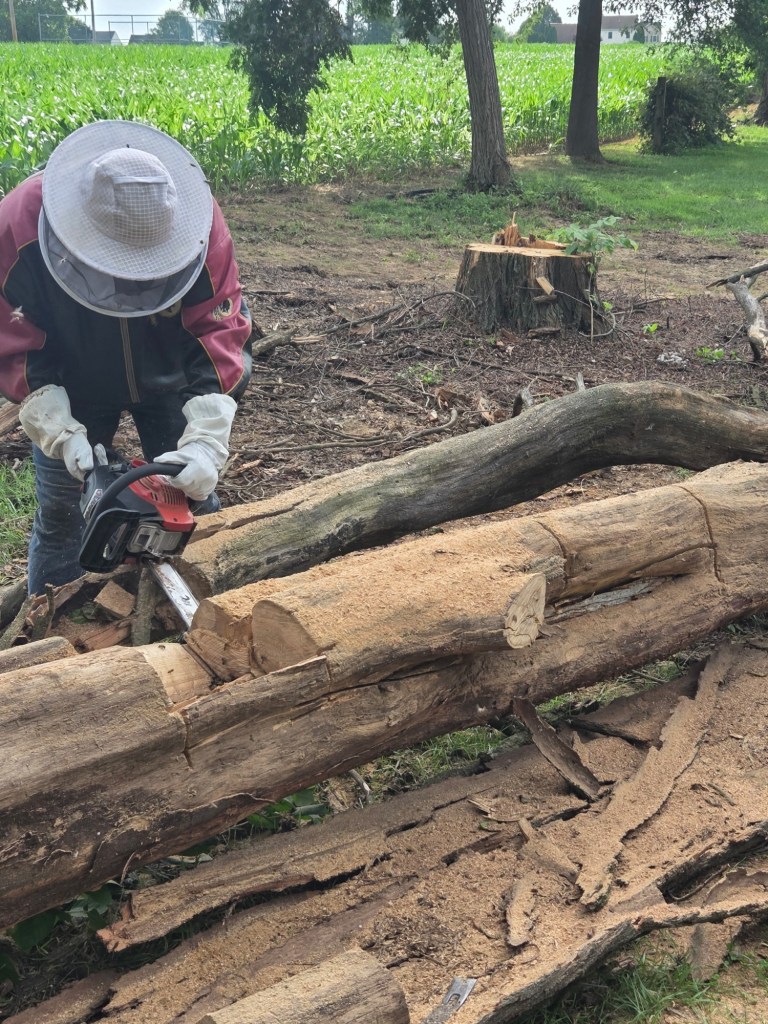
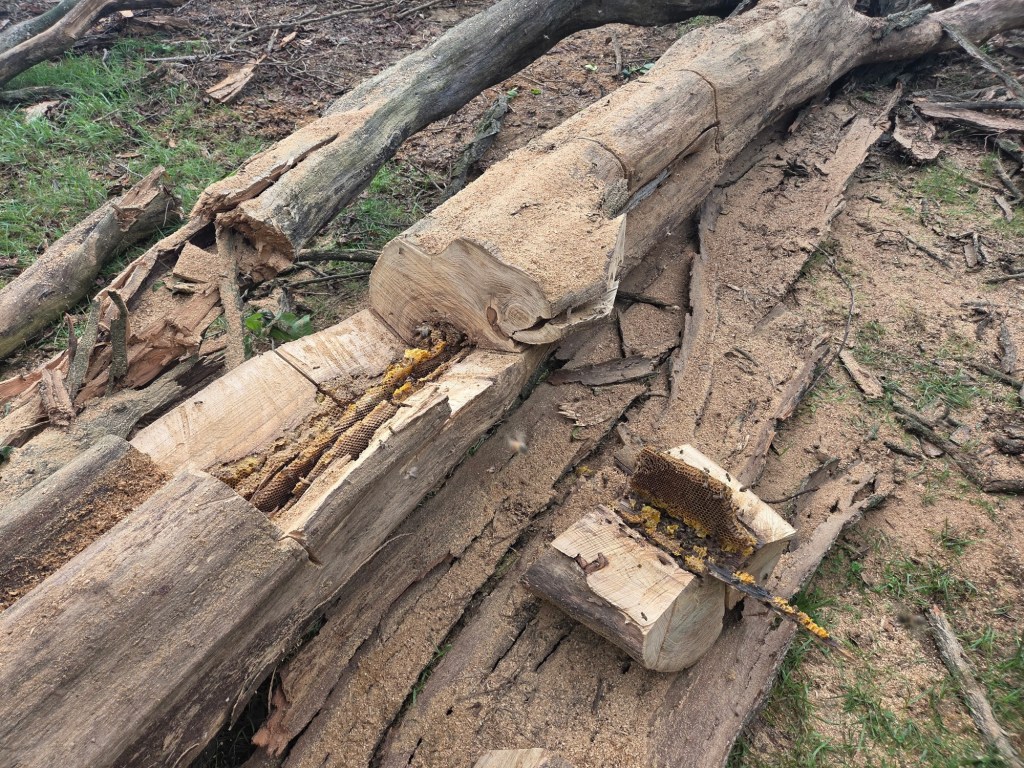
These bees were incredibly tolerant of the chainsaw noise, their home being cut apart and being scooped into the swarm trap. This is usually a sign that they are queen right, which means they have a healthy, egg laying queen. I spent A LOT of time searching for the queen with no luck. That wasn’t surprising because there were so many places for her to hide the cracks and crevices of the tree. What was surprising was that the bees weren’t congregating in any one area. You would expect them to follow her and that wasn’t happening.
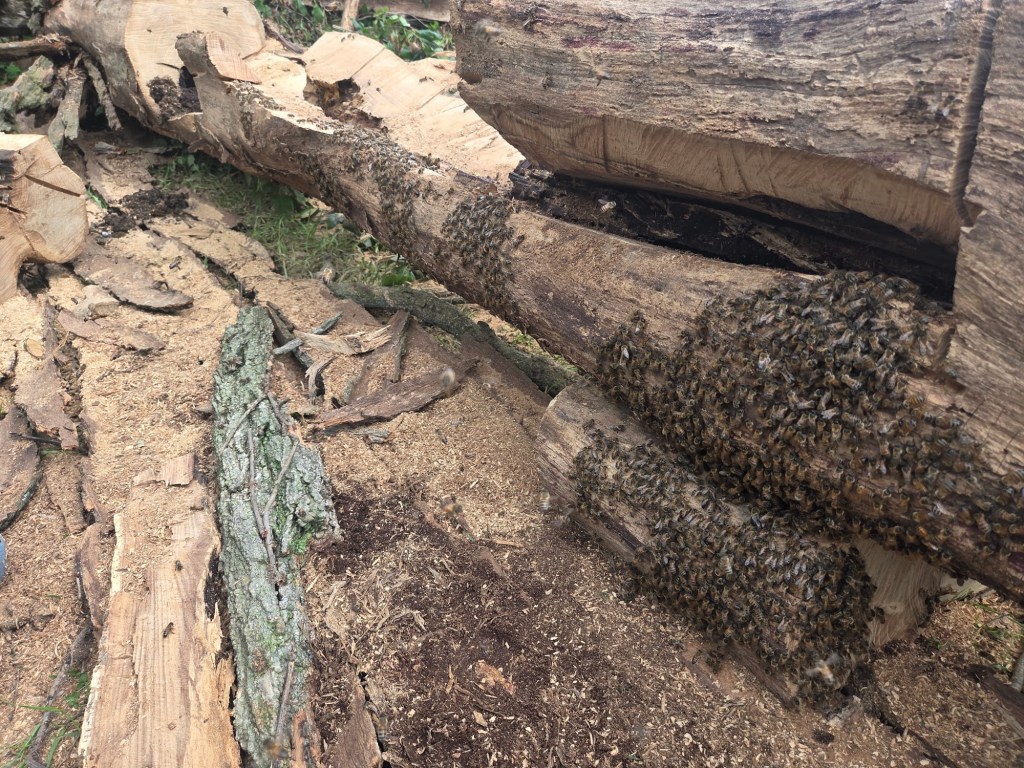
I decided to take a break from searching and to remove the comb from the tree and place it in frames, holding it in place with rubber bands. By doing this, the bees have a good start when they move into a new hive, they can clean up the comb that they already put a tremendous amount of effort into making and continue using it. I was very disappointed as I removed the pieces of comb from the tree. There were only six or seven cells with capped brood and a very small amount of capped honey. Most cells were empty, but I did notice that one piece of comb had eggs. However, several cells had two or three eggs. This is a very clear sign that the queen had died, and a worker began laying eggs. based on the condition of the colony, the queen likely died when the tree fell 3 to 4 weeks before.
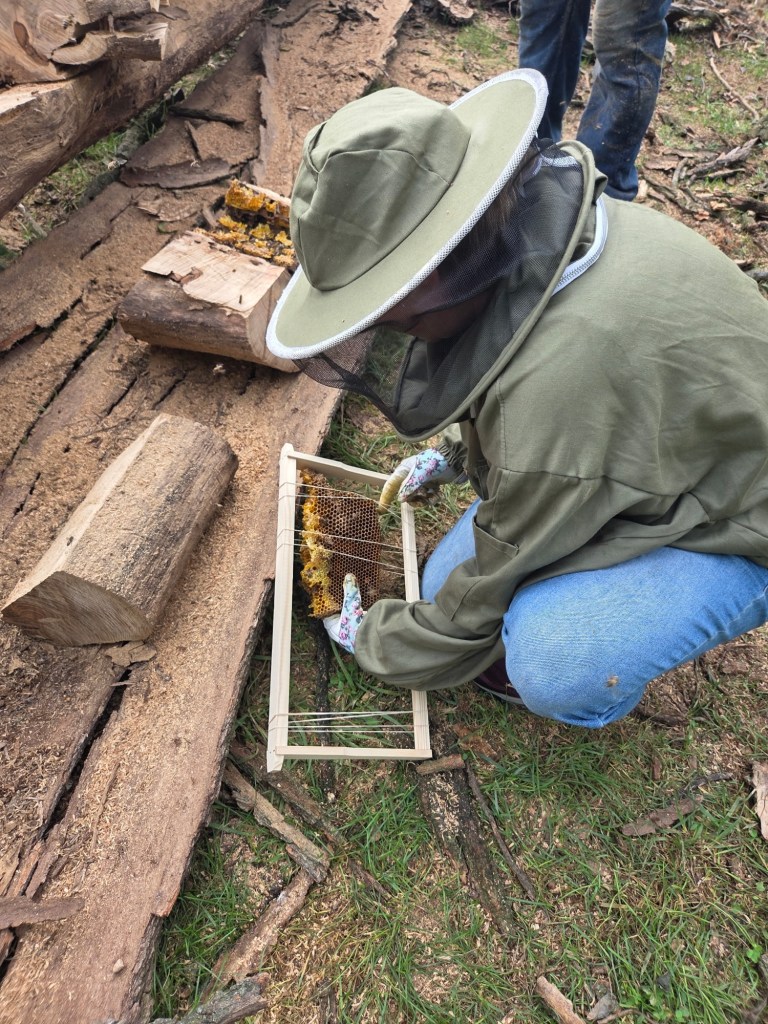
My new friend’s husband, the beekeeper, suggested that I add these bees to another established colony rather than trying to introduce a new queen at this time. Even with the addition of the parking meter bees my Price Place colony was still on a small side, so I decided to take his advice and add these bees to that colony.
Other options would have been to buy a mated queen and introduce her to the colony and hope that they accept her or give them a frame of eggs from another colony and allow them to do what bees do when they need a new queen. They draw out a queen cup, and raise one of the eggs to be a queen by feeding her royal jelly. As I mentioned before during this time of the year, bee keepers are looking towards winter and trying to give colonies the best chance of surviving it so I did not want to take a chance that they would not accept a new queen or that they would fail in producing one.
I set up a swarm trap with some brood from my other colony and scooped as many bees into the box I could. The next day I returned to pick up the trap and most of the bees had migrated to the box and had started caring for the brood that was placed in it. I brought that Swarm trap and set it up next to my hive that I hoped they would join. The next day I move the brood and as many of the bees as I could into the hive along with the comb that was taken from their hive. This is not the proper way to add bees to a hive. Typically, you place newspaper between the hives and allow them to eat the paper away as they start to intermingle. Even though this probably wasn’t the best way to do it the existing colony accepted the new bees and they have been doing great for the last week.
 Pollen Patch Bee Farm
Leave a comment