It is important to regularly check on the health of your colonies by doing hive checks or inspections. I try to get into each of my hives at least once every ten days Some beekeepers do this more and some do it less. It really depends on how often you want to open your hives and how much intervention you are going to provide when you do.
The hive inspection begins before you even touch the hive. Are there bees actively flying around? Are some bees entering the hive with full pollen baskets? Pollen baskets are located on the back legs of worker bees. The foragers fill these with pollen and bring it back to the hive for food. Seeing this is an indication that a laying queen is present, and there are bees inside in all stages of development. how does the hive sound? Do you hear a contented hum or an unsettled roar? How does it smell? On a warm day, a healthy hive smells sweet like honey. A foul smell indicates trouble.

After using a puff or two of smoke at the entrance of the hive you can peel off the lid and inner cover. Again, pay attention and use all of your senses. Do you see a large number of bees? How does the buzz of the hive sound? Does it smell good or does it smell rancid? Do you see any hive beetles, small round bugs, or ants? the bees will likely take care of these pests, but hive Beatles can be deterred with diluted peppermint oil and ants can be deterred by using cinnamon. There are commercial beetle traps available but I don’t use them and can’t say whether they work well or not.
Begin inspecting the hive by removing one frame at a time. Your hive tool will be very helpful to pry the fames apart from each other and the hive. Bees create and use propolis to seal up any spaces in the hive this includes the edges of frames and spaces between them. Replace the frames in the same spot and same direction as they were removed. The bees built the comb in a specific way that works for their colony and we shouldn’t rearrange it unless we have a reason to. During the inspection we are looking for the queen or signs that we have a healthy queen. You don’t have to look at every frame but you do want to see eggs, larva and capped brood. you may see nectar filled cell or capped honey.
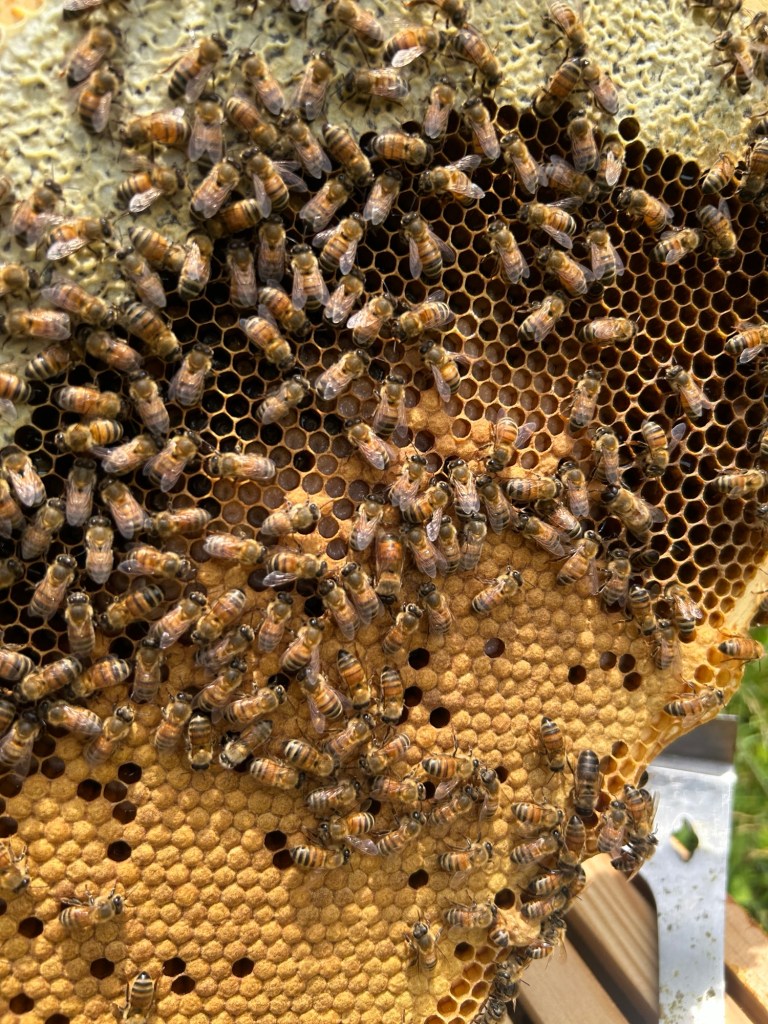
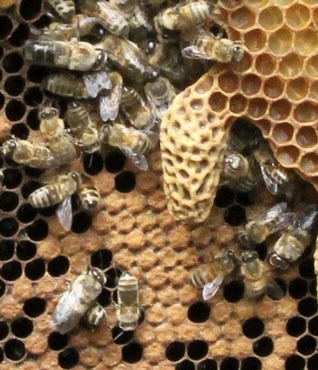
You may see Queen cups, longer cells that hang from the comb. This could indicate the colony is considering swarming or requeening themselves or it could just be to practice building these cups. Swarm cells are usually built along the bottom of the frame and supersede cells are usually built closer to the center of a frame in the comb. Neither of these are always true. Different beekeepers address the cells in different ways. Supersede cells should be left alone because the bees likely have a reason for them, either practice or to replace the current queen. Some beekeepers remove swarm cells to prevent swarming. Others add space to the hive or use this as an indication that it is time to split the hive into two.
 Pollen Patch Bee Farm
Leave a comment