The first part of this story was a rollercoaster of emotions. I was so excited that I trapped my first swarm. Then I was super bummed that they absconded. Then a little hopeful that they may have chosen my second swarm trap as a nesting site.
Over the next few days, I watched as a few bees came and went from the swarm trap hanging from an Oak tree in our yard. Over this course of time, we had a lot of rain and overcast dreary days. There wasn’t a lot of activity, so I wasn’t sure if the bees were planning to stay and set up their colony or if there were just a few stragglers in there. I walked by the box everyday looking for signs that they were making this their home. Finally, I saw a forager bee returning with her pollen baskets full of bright orange pollen. Pollen baskets are concave structures on the hind legs of bees to allow them to collect and carry pollen. They carry this pollen back to the hive to use as food for bees especially for those in the larval stage. This was the sign I was looking for. It meant that there was probably a fertile queen who was laying eggs and the bees were preparing to feed them.

Typically, you leave a swarm trap in place for about a week before moving it. I waited 3 weeks because like I mentioned the weather was not conducive to gathering nectar and pollen for most of that time and the swarm that I thought had moved in was relatively small. I wanted to give them a chance to build their numbers, build honeycomb and start to settle in before I moved them to a permanent hive.
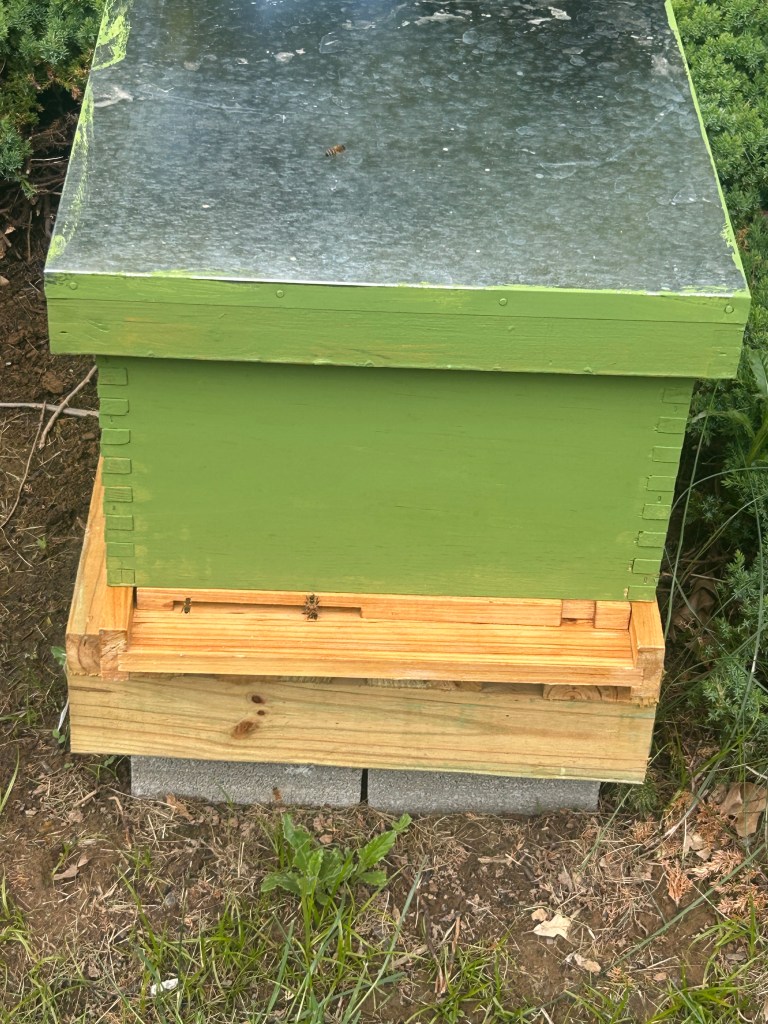
After a few days of nice warm sunny weather, I decided it was time for the move. I waited until after dusk so that most of the bees were back from their day of foraging. I covered the entrance with a piece of cardboard and moved the swarm trap to where I had set up their permanent hive about 15 feet away from where they were previously located. There is a beekeeping “rule” that says you should move a colony no more than 3 feet or no less than 3 miles because they may try to orient to the previous site if the new site is too close or too far to the original. I obviously broke that rule, but I will let you know how it turns out and if there is any truth to it. I set the swarm trap on top of the hive and removed the cardboard from the entrance.
The next day, I put on my beekeeper’s jacket and veil and began to move the frames of comb, eggs and nectar to the deep hive box that I had set up. While doing this, I had my first experience with cross comb. Cross comb is when the bees build comb diagonally or perpendicular to the frames. This means comb is attached to more than one frame rather than in parallel rows. This can happen when using foundationless frames, which is what I am using in this hive. It can be prevented by using guides as a starting place for the bees to begin building their comb or wires to guide them. I will write a post on that at a later time. These particular frames did not have guides or wires, so lesson learned.
I separated the comb that was stuck together and crossing multiple frames and secured them in individual frames with rubber bands. The bees will reattach the comb to the frames, then chew away the rubber bands and take them out of the hive. It was not a good feeling to pull apart the comb that they had worked so hard to build so I will definitely use comb guides in the future.
Later that evening, I found a few bees returning to the oak tree. I picked them up and moved them to the entrance of the hive. Since then, the bees have been coming and going and they seem to be very happy with their new home.
 Pollen Patch Bee Farm
Leave a comment